


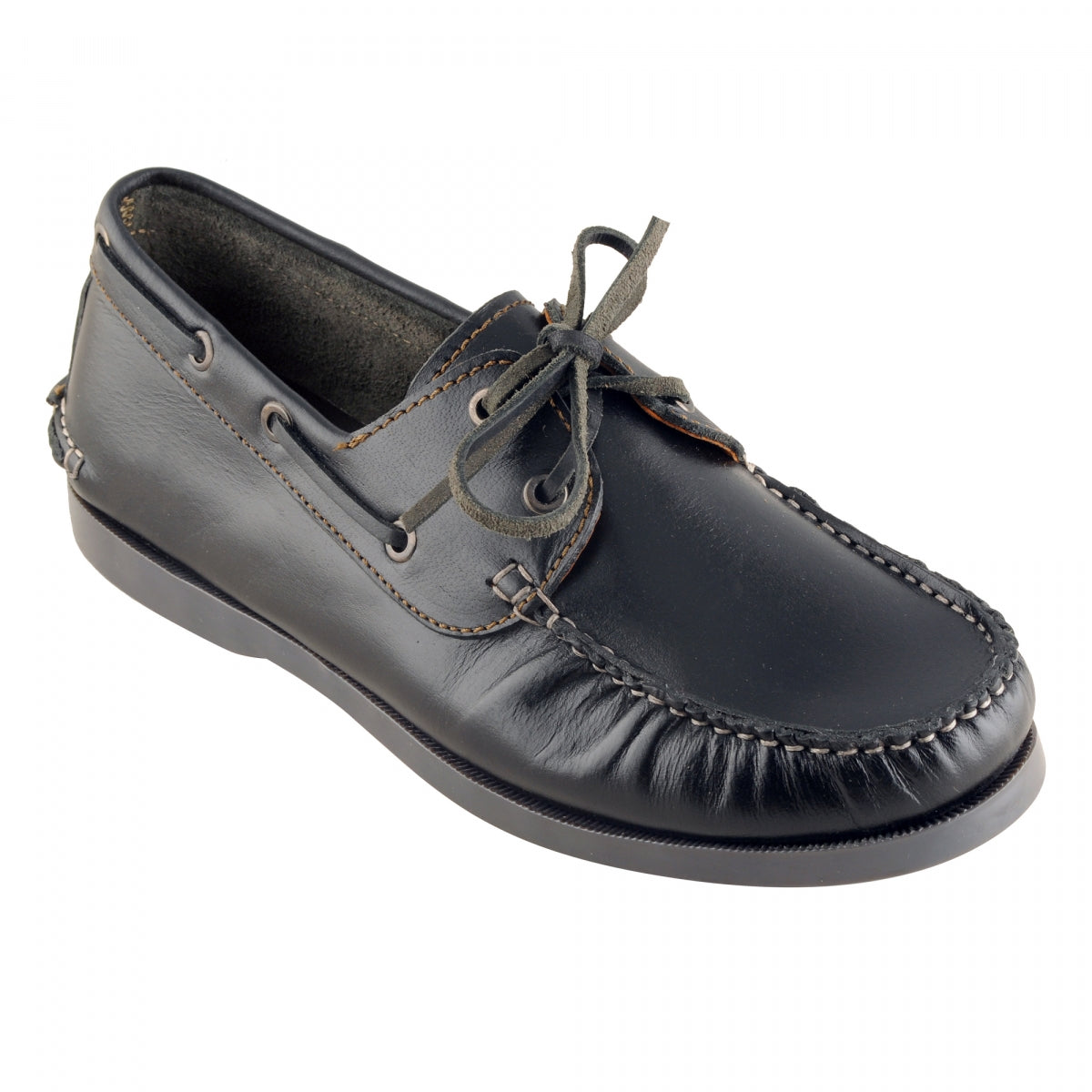
TZARO Timber Brown Boat Shoes | True Moc Construction | Nubuck Leather | Memory Foam Cushion | TIMBERNUBRW
TZARO Timber Brown Boat Shoes | True Moc Construction | Nubuck Leather | Memory Foam Cushion | TIMBERNUBRW
Including all taxes.




Couldn't load pickup availability
About the product
The Brown That Earns Its Name Most browns in footwear are an agreement — a safe middle ground between chocolate and camel, landing somewhere unremarkable. Nubuck Brown on the Timber is not that. It sits in a specific, warm register: the tone of well-used saddle leather caught in afternoon light, closer to raw umber than proce... Read moreComfort Is No Accident




Get in Touch
Have a question or a special request? Let us know and our team will get back to you.
- Product Details
- Technical Details
- Faq's
- Customization
The Brown That Earns Its Name
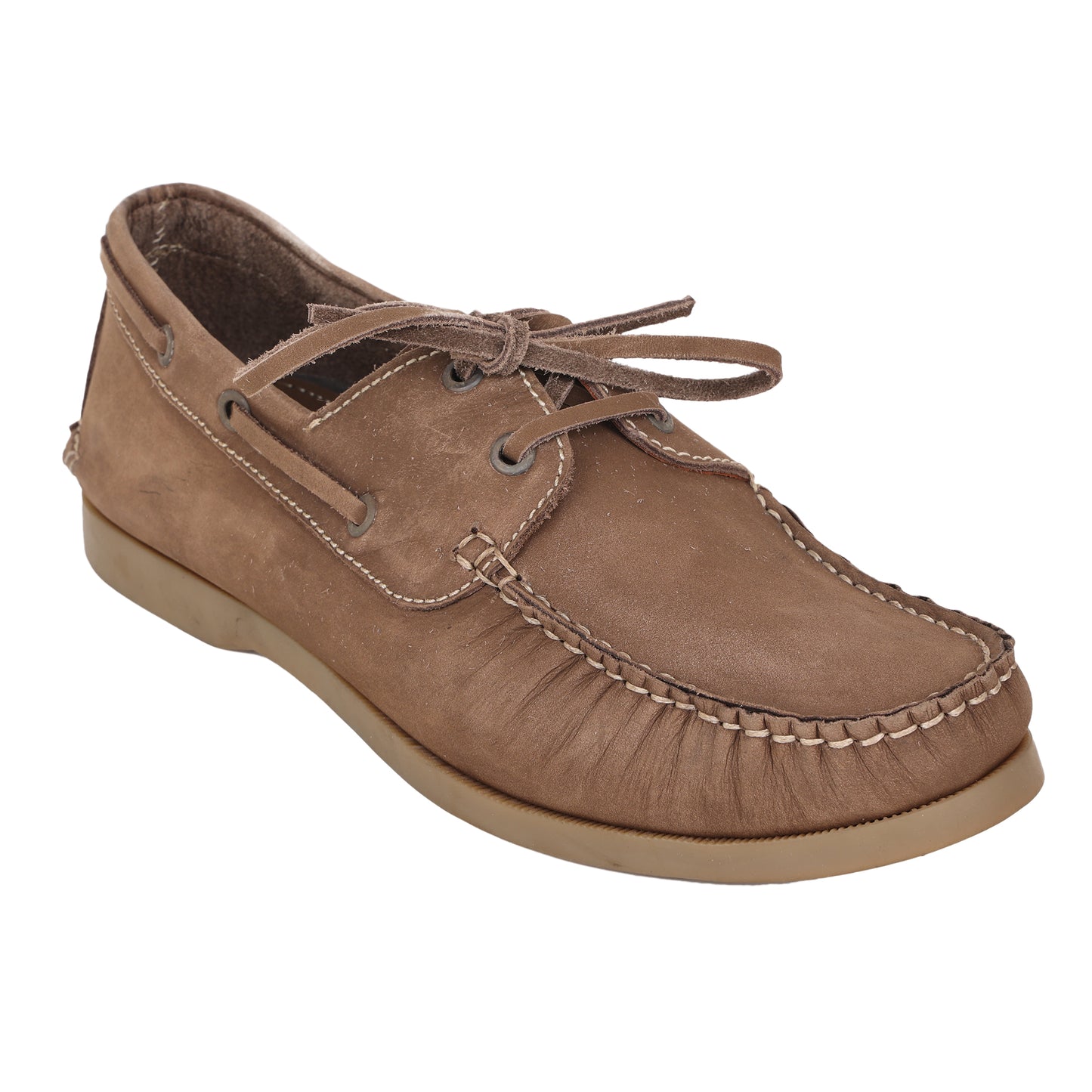
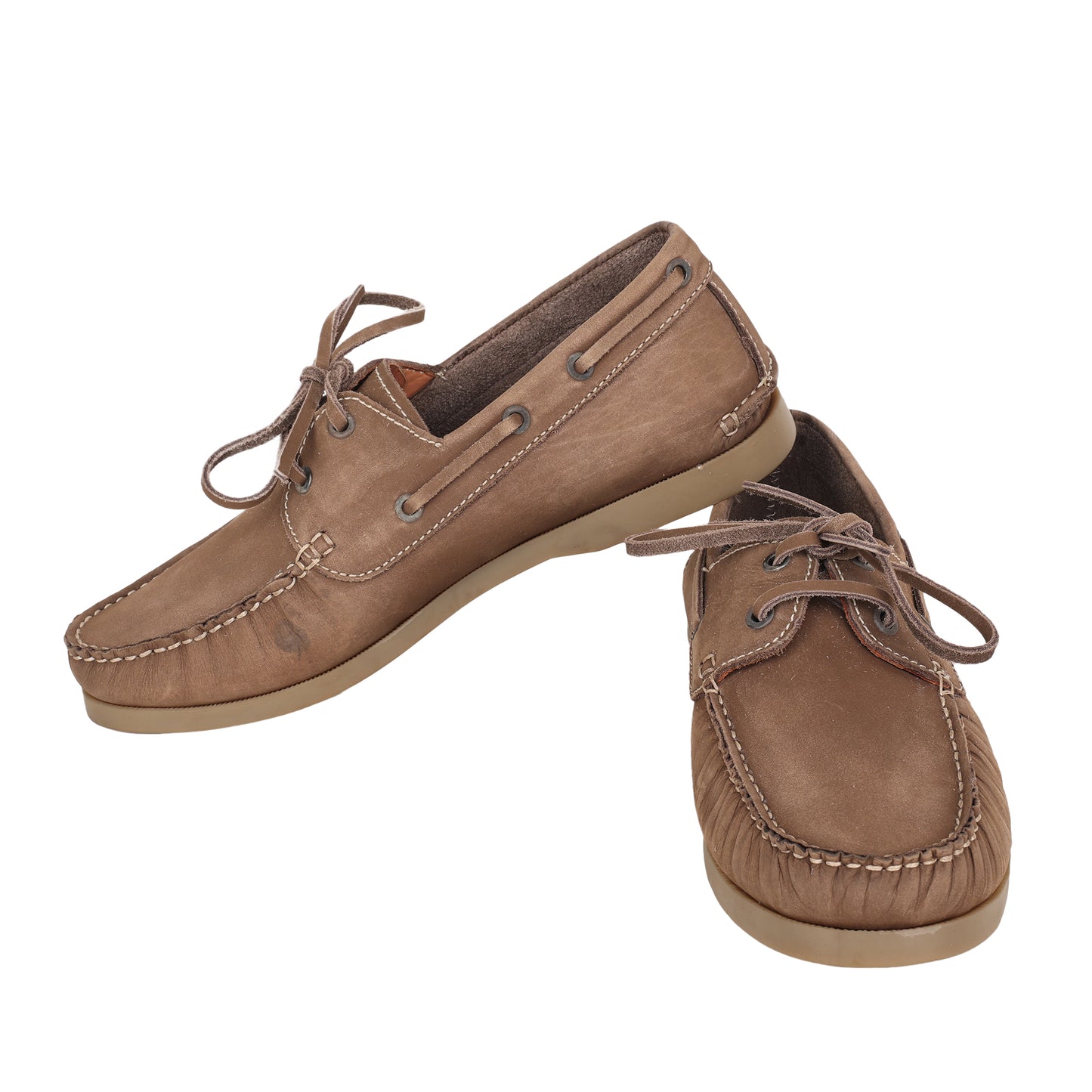
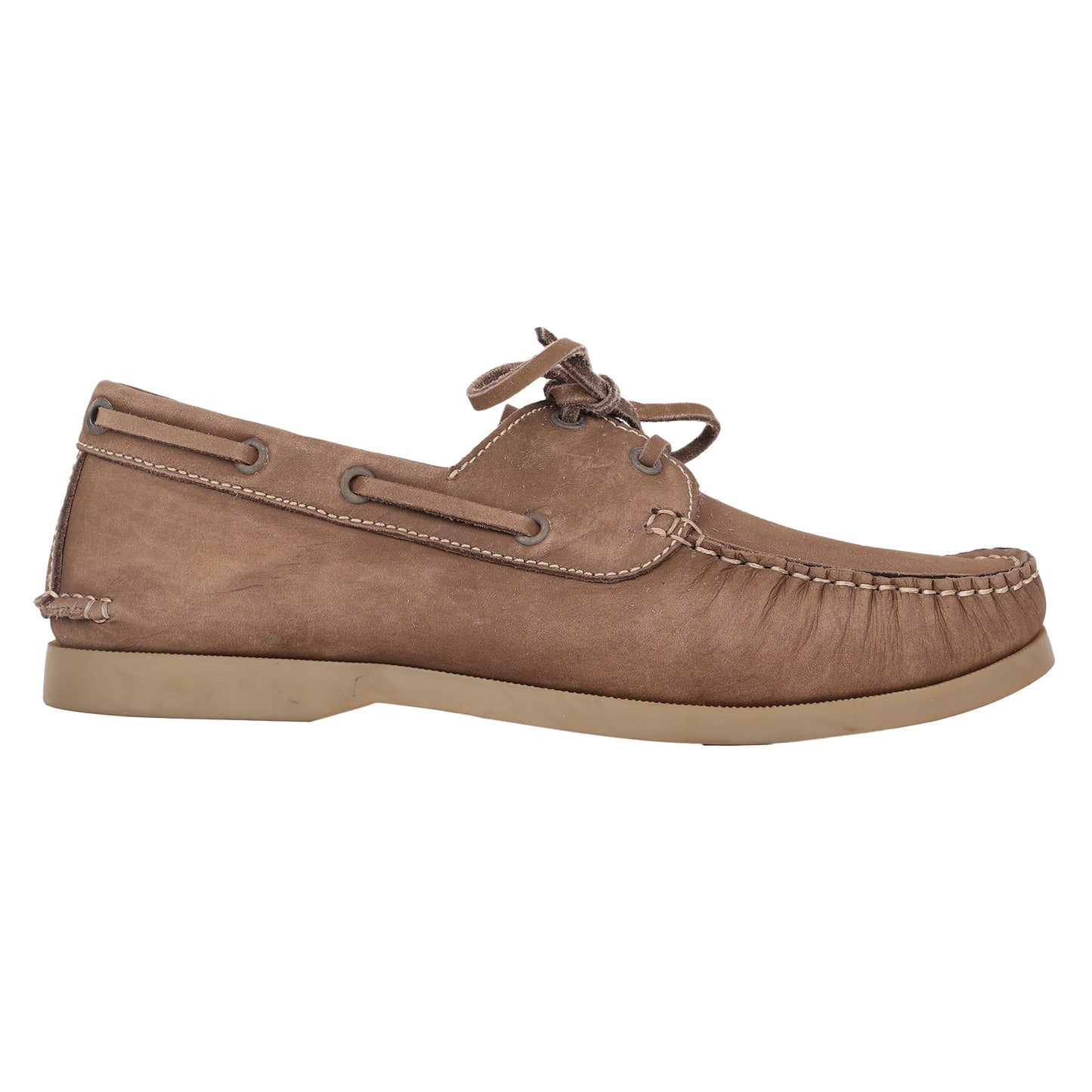
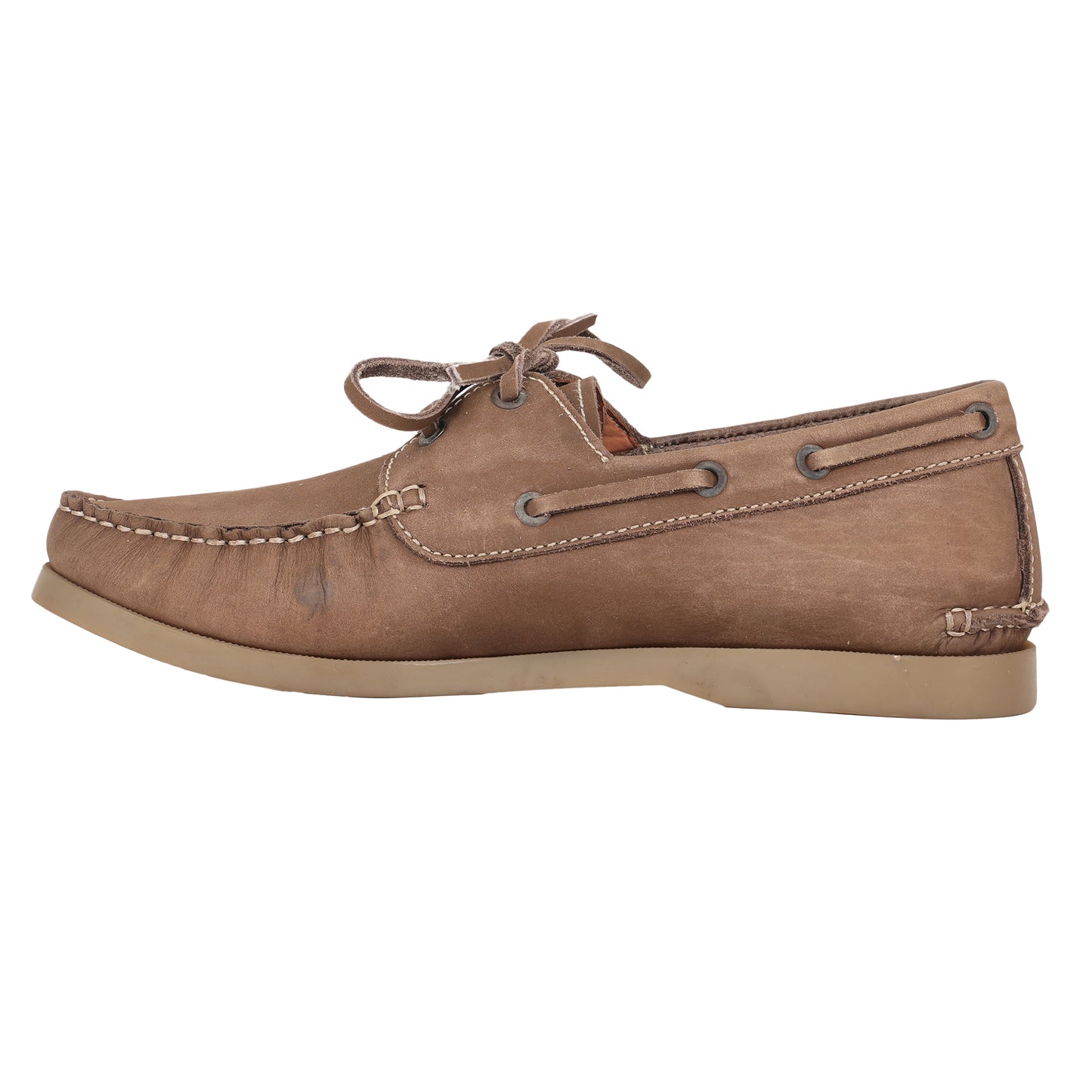
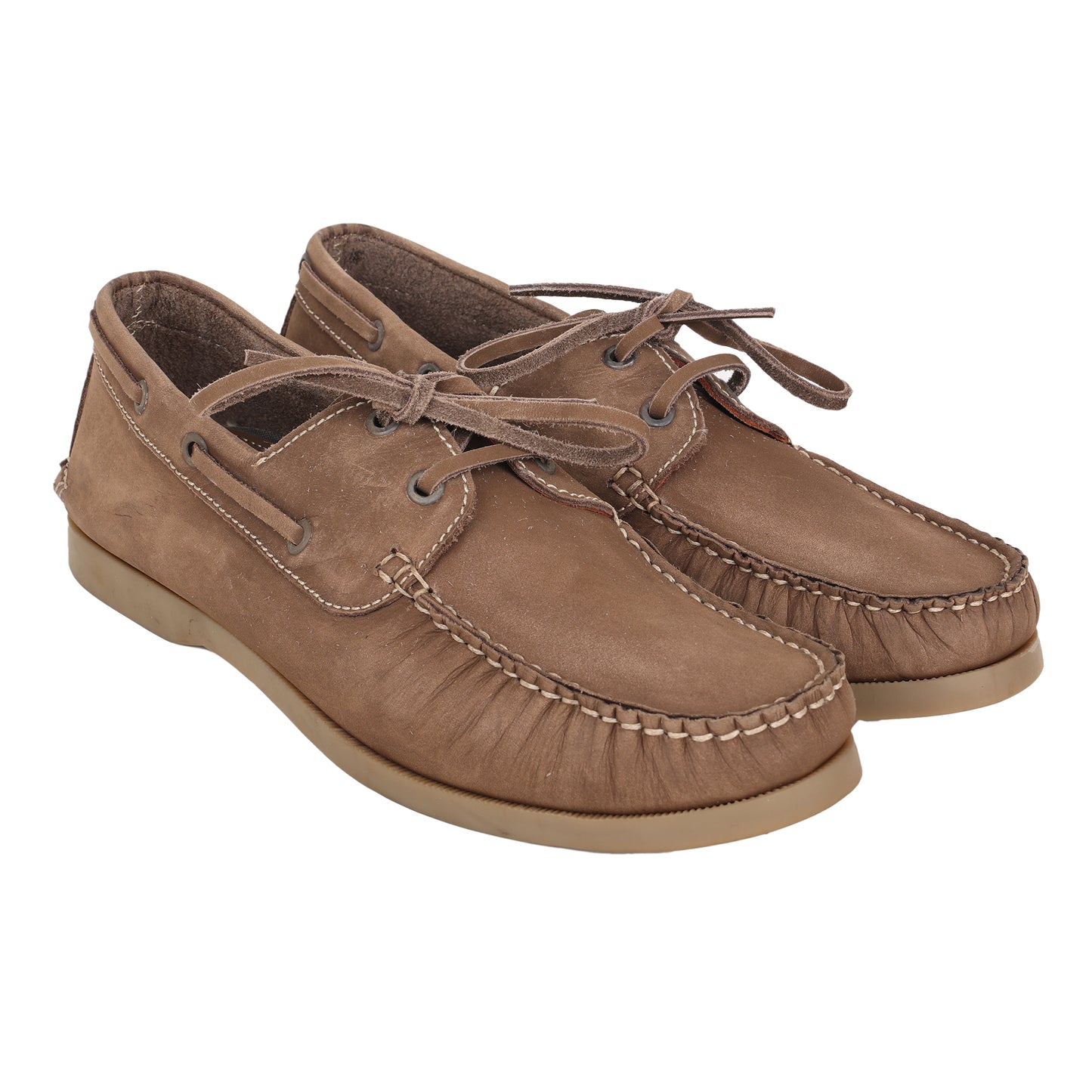
Most browns in footwear are an agreement — a safe middle ground between chocolate and camel, landing somewhere unremarkable. Nubuck Brown on the Timber is not that. It sits in a specific, warm register: the tone of well-used saddle leather caught in afternoon light, closer to raw umber than processed tan, with a matte surface depth that polished leathers simply cannot achieve.
That surface is what defines Nubuck. Unlike smooth full-grain leather, Nubuck is buffed on the grain side — the outermost, tightest layer of the hide — to produce a fine, velvety nap. The result is a leather that looks understated but feels substantial; one that carries texture rather than shine. In a sea of glossy brown boat shoes, the Timber Nubuck Brown reads as quieter and, for that reason, considerably more interesting.
Nubuck also ages in a way that sets it apart. The nap, compressed with use and wear, gradually develops a natural burnish — lightening at flex points, deepening in recesses — without ever becoming shiny or lacquered. After a few months of wear, the shoe will have acquired a tonal range that no dye job or factory finish can replicate. It becomes a record of use, worn in exactly the right way.
Held Together by Real Leather — Including the Lace
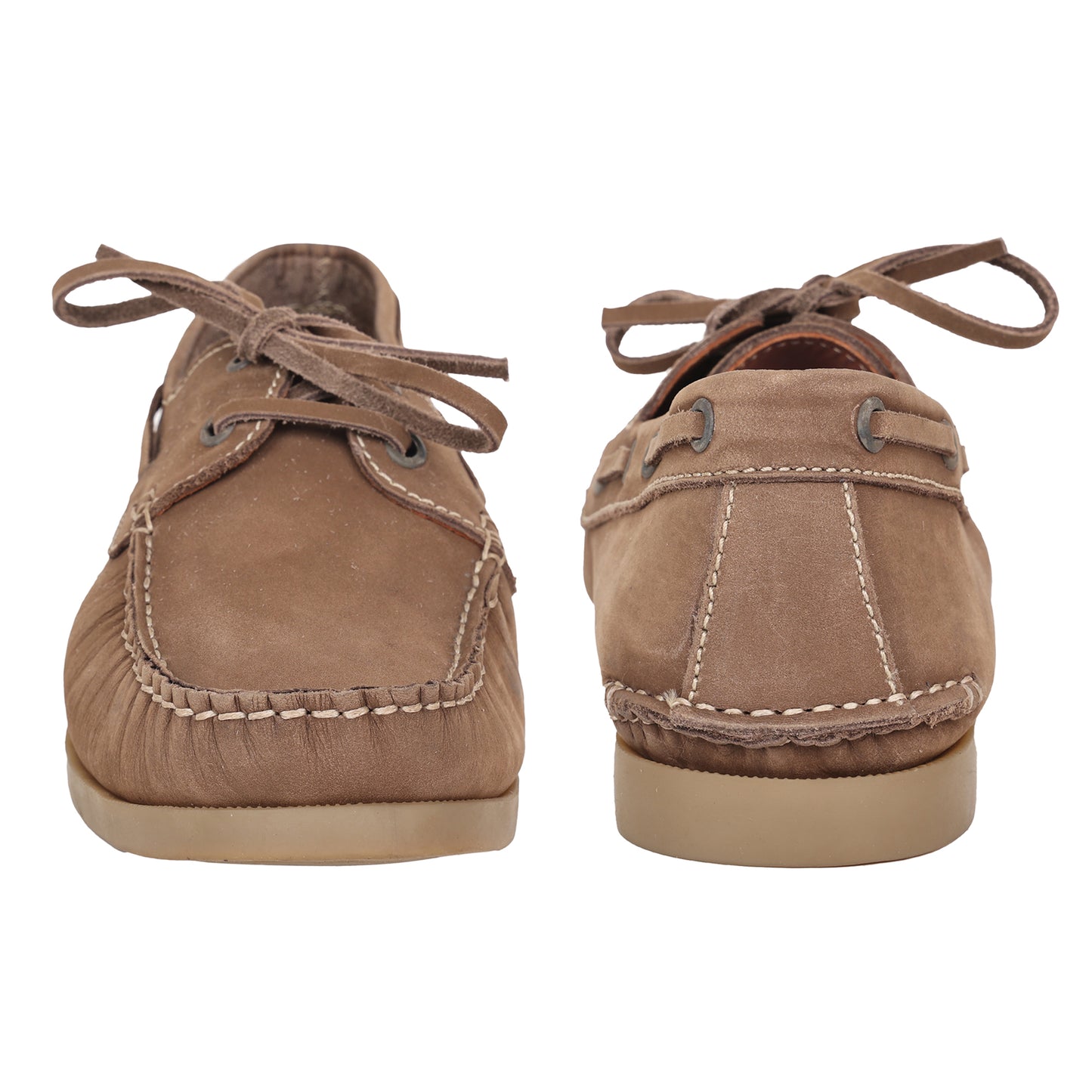
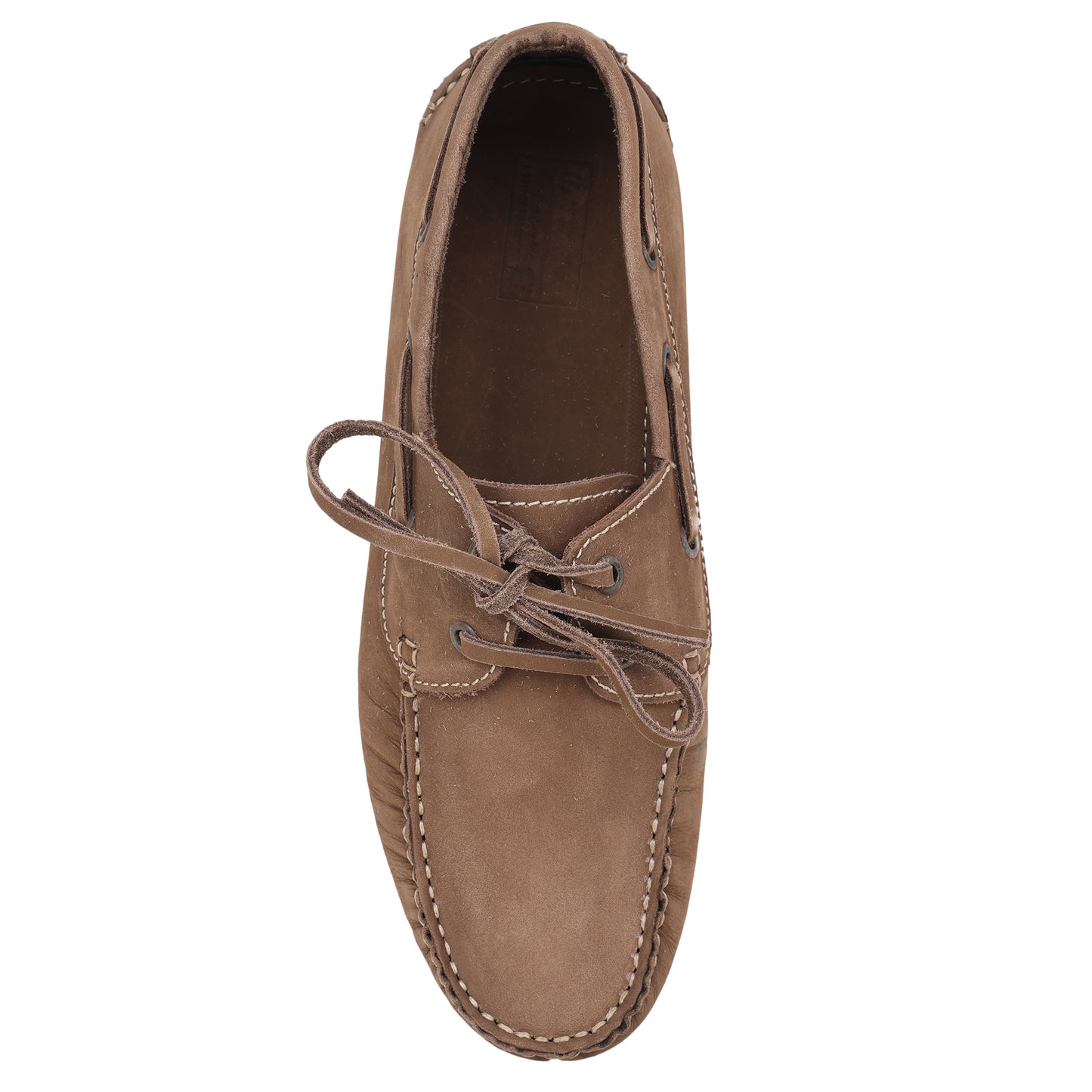
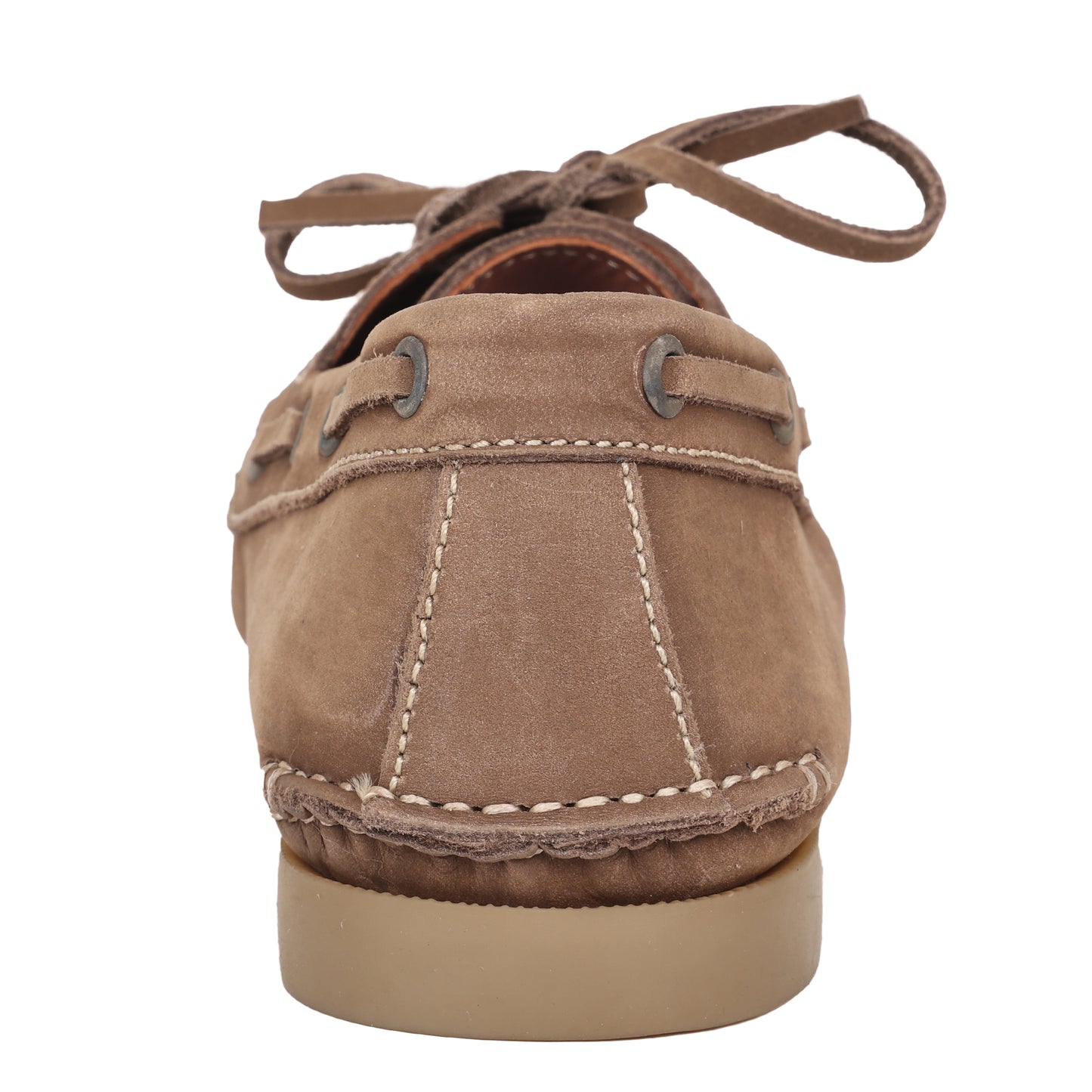
The Timber Nubuck Brown comes laced with a genuine leather lace — a detail that is as functional as it is considered. Fabric or synthetic laces stretch, fray, and absorb moisture. A leather lace does none of these things. It holds its tension over time, ages in step with the upper, and gives the shoe a coherent, finished look from vamp to collar. The lace does not fight the shoe visually; it completes it.
Once adjusted to your foot in the first few wears, the lace needs almost no further attention. The Timber transitions naturally into a slip-on — the wide collar opening, a classical trait of boat shoe design, does the rest.
The Construction That Makes the Difference
The Timber is built on True Moc technique, and it is worth understanding precisely what that means before assuming it is just a design term.
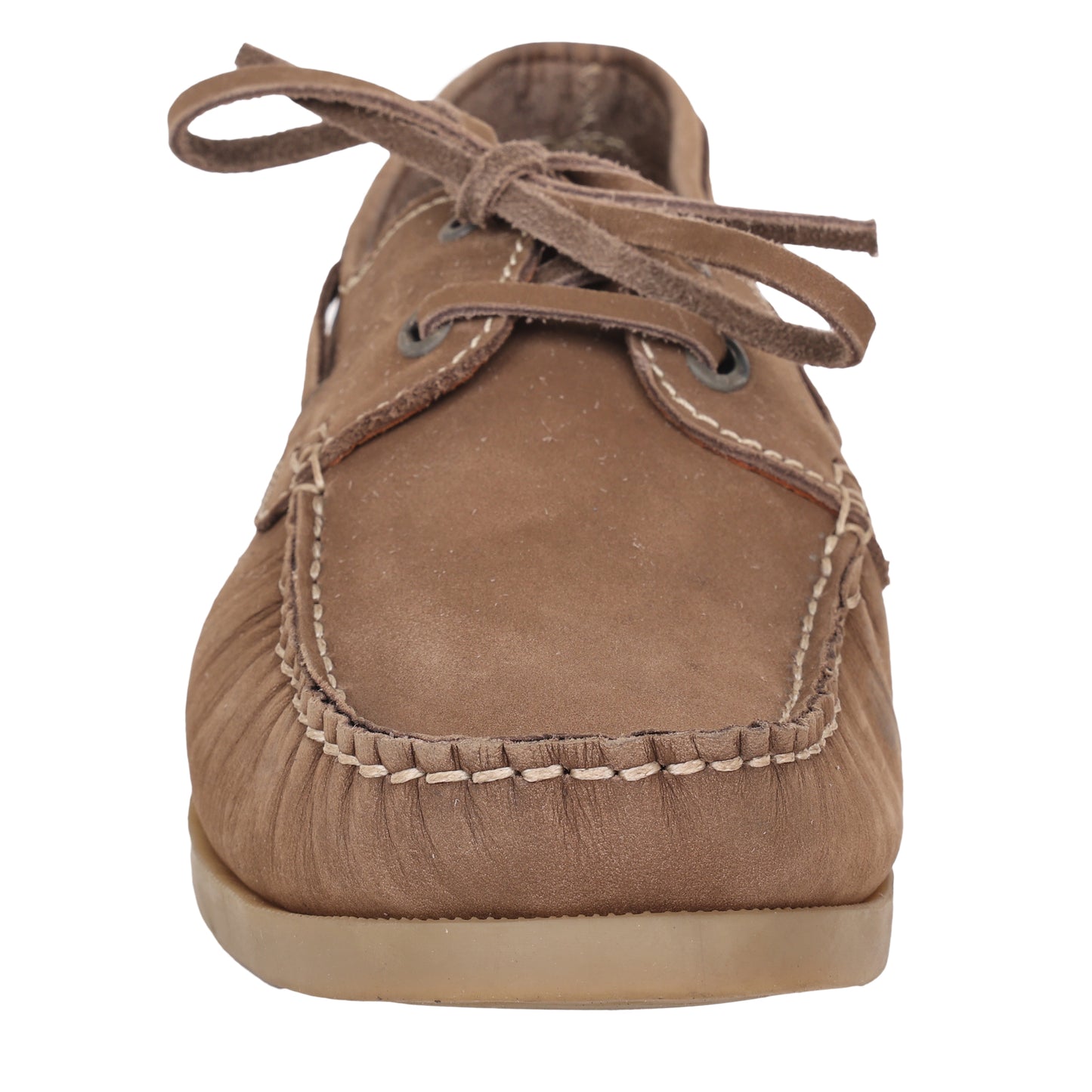
In standard cemented construction, the upper is a separate piece, glued to a platform sole under factory pressure. The join is rigid. The shoe sits around the foot rather than with it. True Moc construction eliminates this rigidity at the source. Here, the leather extends continuously beneath the foot — wrapping upward and stitching into the upper in a single, unbroken seam. There is no seam line at the midsole because there is no separate midsole assembly. The leather is the structure.
This technique uses approximately 40% more leather than cemented construction and demands considerably more skill at each stage of stitching. What it returns is a shoe with a natural, built-in flex: the upper breathes and moves with every step, expanding with the forefoot under load and returning with it. The snug, sock-like fit that boat shoes are known for only works properly in True Moc — because only this construction can accommodate the foot's movement without resisting it.
The Timber is unlined, adding to this responsiveness. Without an inner lining, the Nubuck leather sits directly against the foot, absorbing moisture efficiently and releasing it — keeping the environment inside the shoe cool even in prolonged wear. This shoe is built to be worn without socks, and it performs accordingly.
Under Foot: Grip, Cushion, and Longevity
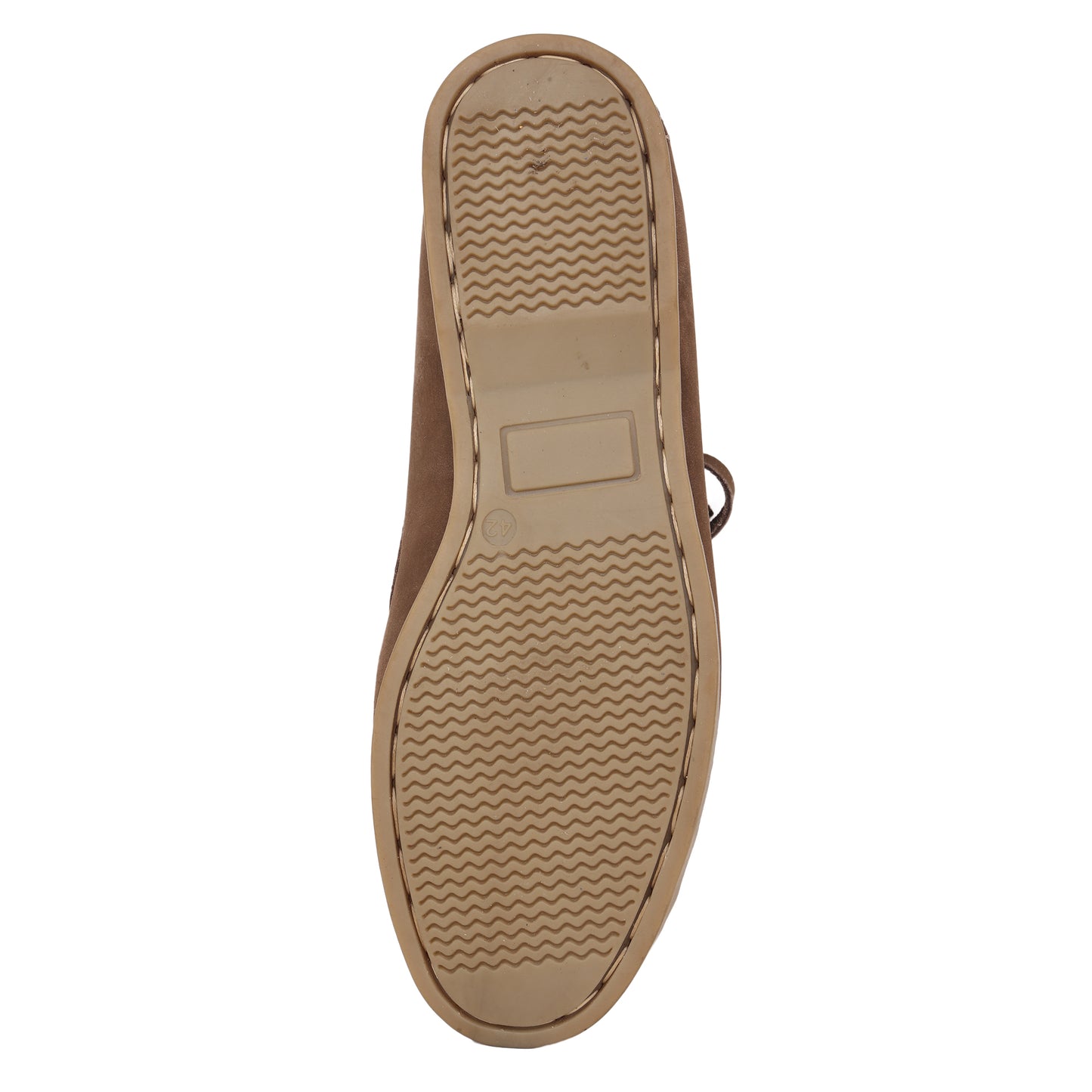
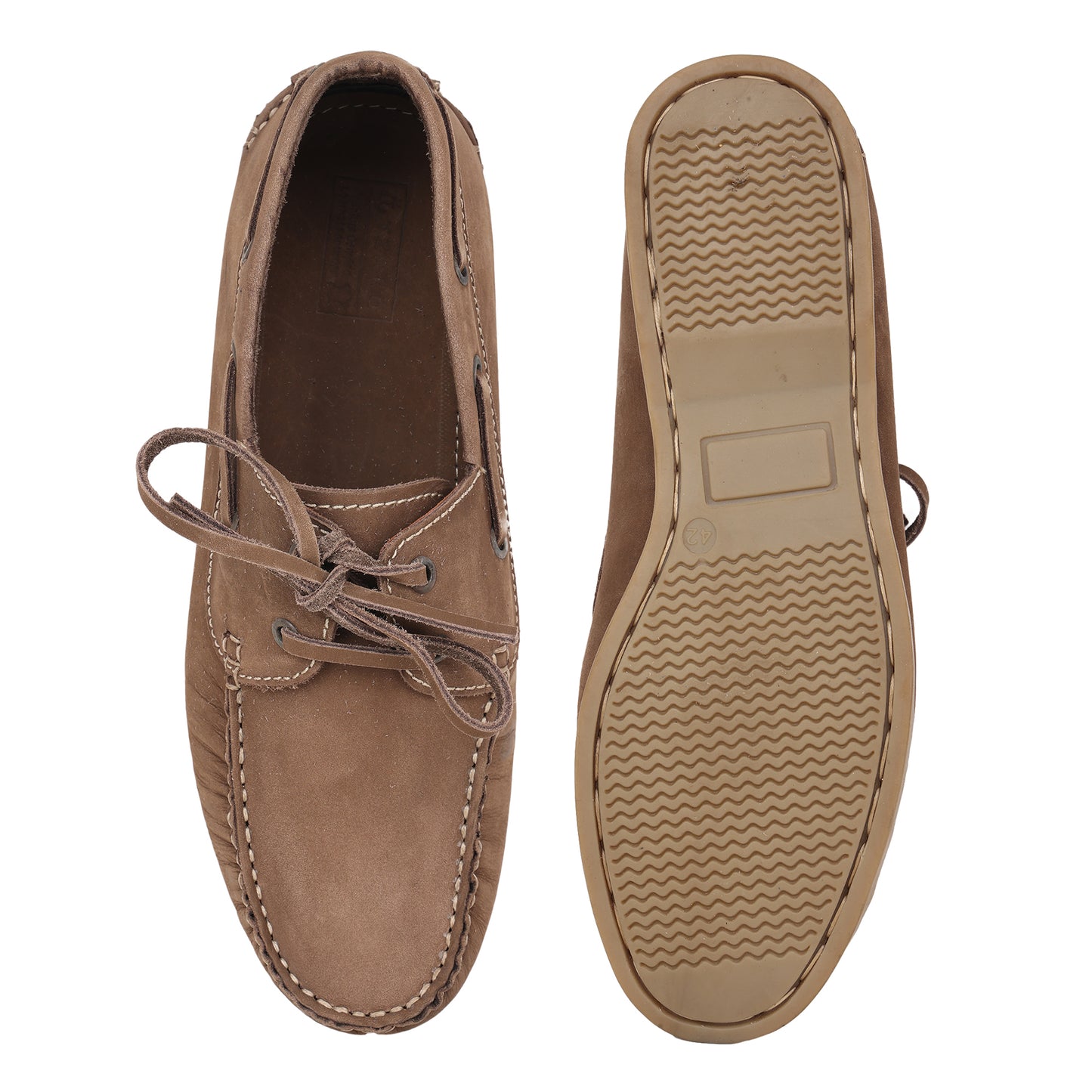
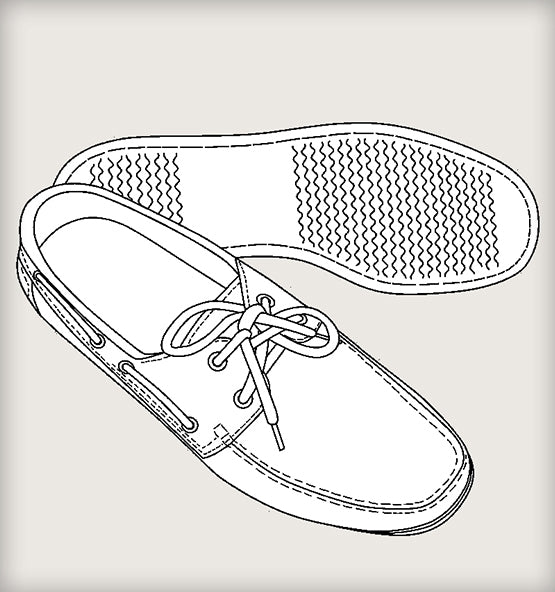
The sole is TR (Thermoplastic Rubber) with a herringbone pattern — the same geometry Paul Sperry cut into his shoe after watching his dog find grip on ice. TR occupies a useful performance position between rubber and engineering-grade plastics. It absorbs impact, retains flexibility in cold conditions, holds form in heat, and resists the structural breakdown that causes cheaper soles to crack or delaminate over time. The herringbone gives the Timber traction on wet stone, slick flooring, and the kind of unpredictable surfaces a boat shoe was originally designed for. The sole on this shoe is honey-coloured — a warm contrast to the brown upper that ties the whole profile together.
Inside, the cushioning is a two-layer system: latex beneath, memory foam above. This is not incidental comfort — it is a structural decision. The memory foam distributes pressure across the footbed and reduces the impact transferred to the ankle and knee. The latex layer below it restores the cushion's shape between steps, so the support remains consistent over hours of wear rather than compressing and flattening by midday. The heel is cushioned more aggressively than the forefoot, redistributing the load that accumulates in the ankle and lower joint over long periods of standing or walking.
The Honest Summary
- Leather: Nubuck — buffed grain side for a velvet-matte texture; a deep warm brown that develops natural burnish with wear
- Lace: Genuine leather lace — ages with the shoe, holds tension without stretching
- Construction: True Moc — leather wraps beneath the foot in a continuous seam; 40% more leather than cemented construction
- Fit: Snug and sock-like; expands naturally to the foot's shape over first few wears
- Sole: TR (Thermoplastic Rubber), honey-coloured, herringbone anti-skid pattern — performs across temperature zones
- Lining: Unlined — direct leather contact, superior breathability, sweat-efficient
- Cushioning: Latex + memory foam — active stress redistribution at heel; knee-friendly for all-day wear
- Warranty: 3 months against manufacturing defects (stitch and sole strength)
Who This Shoe Is For
The Timber Nubuck Brown is the boat shoe for someone who has looked at brown shoes and found them all slightly too obvious. The Nubuck surface sits at a tonal register that reads as considered rather than conventional — warm enough for casual weekend wear, restrained enough to work with chinos and an open collar on a Friday. The leather lace and honey sole give it a visual coherence that mass-market boat shoes, with their plastic laces and generic black soles, cannot match.
Wear it once and the True Moc construction makes its case immediately. Wear it for a season and the Nubuck will have developed a patina that belongs entirely to you.
| Shoes Type | Boat Shoe |
| Material | Full Grain Leather of Nubuck Finish |
| Fit | Snug Fit |
| Construction Technique | True-moccasin |
| Shoe Color | Brown |
| Sole Color | Honey |
| SKU | TIMBERNUBRW |
Boat Shoe Made with Classical Principles
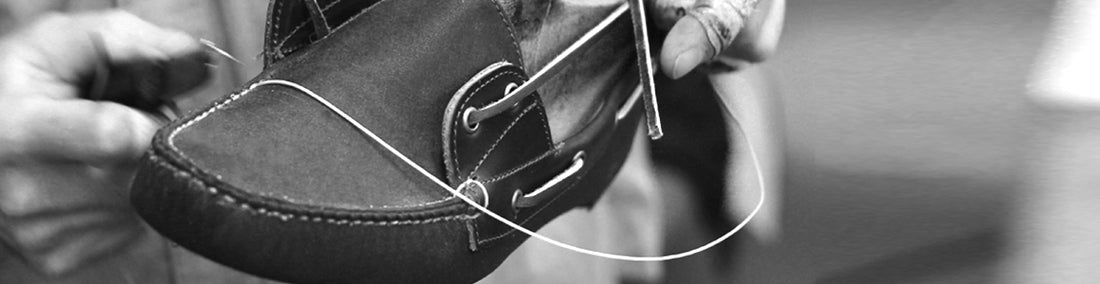
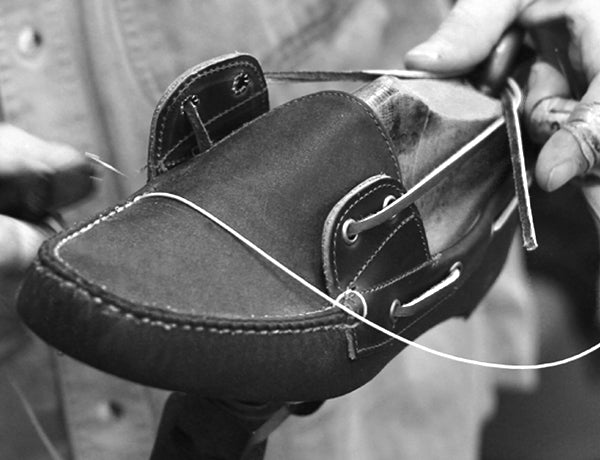
These boat shoes follow all the classical principles of boat shoe. They come with antiskid sole, have wider opening and come in MOCTOE construction. Thick unlined genuine leather gives it long life and also great ventilation
Product Highlights
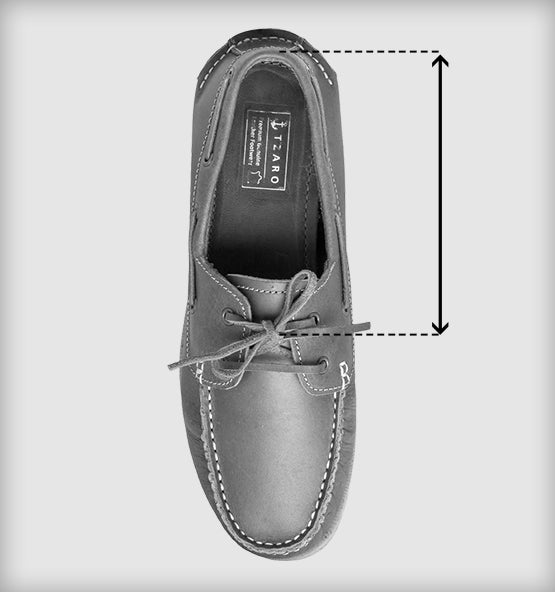
Bigger Opening
The bigger opening is classical trait of boat shoes, it makes getting in and out of the shoe lot easier. Some people describe boat shoes as “looks like a shoe but is as convenient as a slipper”.
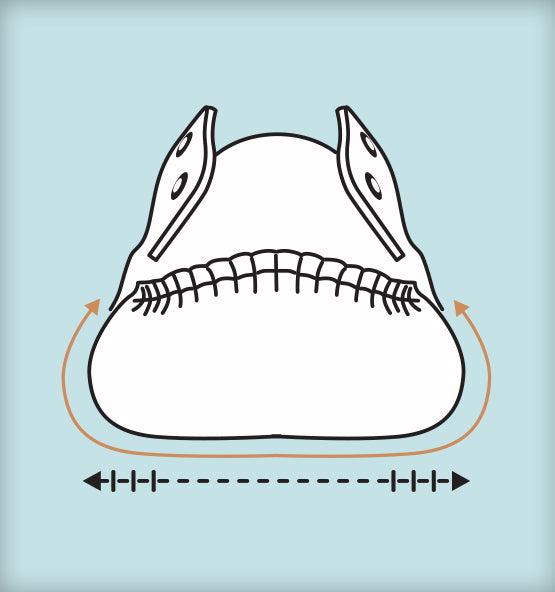
True Moccasin Construction
The leather wraps like an envelope below the feet; this construction technique gives the shoes an amazing ability to expand and contract with every step you take in these which adds to its comfort. This technique is somewhat rarely used as it consumes more leather than usual cemented construction. It’s an amazing experience to use shoes made with MOCTOE technique.
Anti-Skid Long Life TR Sole
These boat shoes are made with TR sole with herringbone pattern which gives them greater grip in outdoor conditions. TR sole also gives a stable performance across temperature zones [works well in Colder as well as Hot Geographies]. This sole will last well over the years [even if you use them daily].
| Shoe Upper | Nu-buck Family of Leather |
| Sole Material | TPR |
| Cushioning | Latex & Memory Foam |
What is a Boat Shoe?
Boat Shoe is particular kind of moccasin which has wider opening giving it an open shoe feel to it. This is usually made with softer and thicker leather and is usually unlined. The shoes are made with True-Moccasin construction technique.
What is True-Moccasin construction Technique?
True Moccasin construction refers to a technique where the leather swings like an envelope all around the feet. Boat shoes have a snug fit or they fit like socks which means that the leather needs to expand when you walk (the muscles expand when the pressure is on the big toe area). Only true moccasin construction allows for this expansion. This technique consumes 40% more leather but the comfort is unmatchable.
What is TPR material?
Thermoplastic Rubber is a special grade material which has qualities of both rubber (in terms of abrasion flexibility) and long life of Special Grade Plastic like PU or EVA. Soles made of this material have a longer life in both cold hot climates.
What's the difference between Faux Leather Shoes and Genuine Leather Shoes?
Faux Leather shoes do not breathe and feet will become hot from inside. Well-made genuine leather shoes (with genuine leather lining) will keep your feet cool even after 10 hours of usage in 40 degree Celsius zones. Genuine leather has 50 times longer life than Faux Leather Shoes.
You can customize TZARO shoes to make it even more comfortable

Please share details for us to get in touch
We will call you and understand your requirements and guide you on next steps.
Customize TZARO Shoes-

DELIVERY
Our standard deliveries are limited to the PIN codes within our serviceable areas. For shipments to non-serviceable PIN codes, please reach out to us at CS@aanalyticsIQ.com. We manage such deliveries through an alternate process. This policy also applies to international deliveries, which are handled offline. Please note that additional delivery charges apply to international orders, and these shipments are non-returnable.
-

CASH ON DELIVERY
COD Eligibility: Cash on Delivery (COD) is available for all orders of ₹500 or more, provided your PIN code is within our serviceable areas.
Large Orders: Please note that we may selectively decline COD for large orders at our discretion.
Refunds for COD Orders: Refunds for COD orders are processed via NEFT. To initiate a refund, you will need to provide your bank account details. Refunds via NEFT typically take up to 7 working days.
Prepaid Order Refunds: Refunds for prepaid orders are processed through the payment gateway used for the transaction.
-

RETURN
Eligibility: You may return or exchange a delivered product, but the request must be initiated within 3 days of delivery.
Condition of Returned Products: The product must be returned in its original condition, with all tags and labels intact.
Pickup Process: Our logistics partners will arrange for the product to be picked up from your location.
Exchange Policy: Please note that only one exchange per order is complimentary.
Initiating a Return or Exchange: You can initiate the process through the ‘My Orders’ tab in your account.
Refund Process: Refunds will be initiated once the returned package is received at our warehouse.


